 JapanMachineryTrader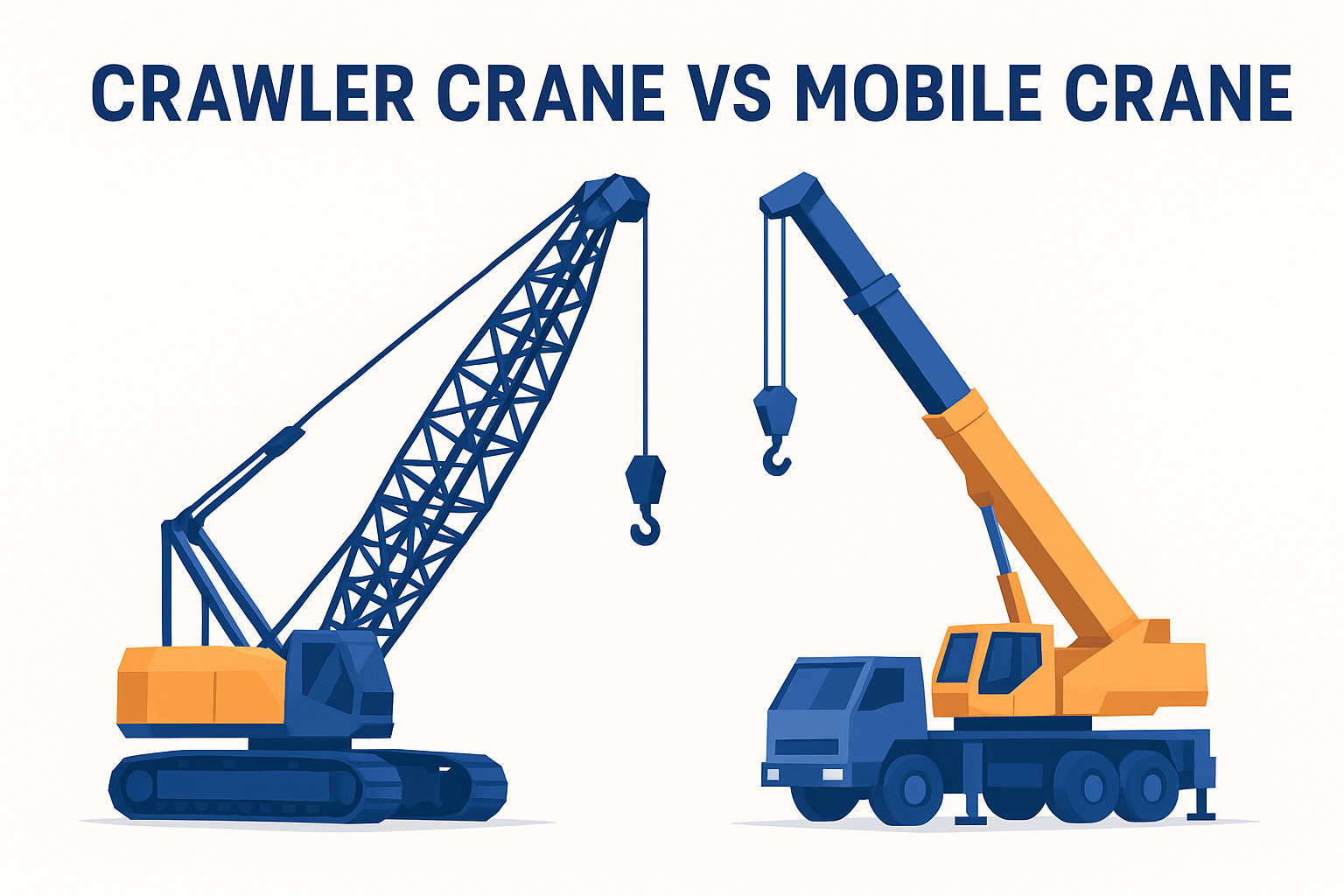
Choosing between a crawler crane vs mobile crane comes down to your project’s specific demands, the terrain, the lifting capacity you need, how often the crane will move between sites, and your budget. Both crane types serve critical roles on construction and infrastructure projects, but they’re built for fundamentally different working conditions. Picking the wrong one costs you time, money, and productivity.
At Japan Machinery Trader, we source and export used heavy construction equipment from Japanese rental fleets, machines that have been maintained under strict service schedules and operated in controlled conditions. That firsthand experience with equipment sourcing gives us a practical perspective on what separates these two crane categories, and why the choice matters so much for buyers operating in cost-sensitive markets across Africa, the Middle East, Asia, and beyond.
This article breaks down the core technical differences between crawler cranes and mobile cranes, compares their lifting performance and terrain capabilities, and covers the real cost considerations you should weigh before purchasing. Whether you’re expanding your fleet or buying your first crane, this guide gives you the information you need to make a confident decision.
Why the crawler vs mobile choice matters
The crane you select directly affects your project timeline, operating costs, and site safety. A crane that’s wrong for your terrain or lift requirements forces you to either work around its limitations or bring in additional equipment, both of which drain your budget and slow your schedule. When you’re evaluating the crawler crane vs mobile crane decision, treat it as a foundational planning step, not something you sort out after you’ve already committed to a project scope.
The cost gap is significant
Crawler cranes and mobile cranes carry very different price tags, both to buy and to operate. Purchase costs for crawler cranes trend higher because of their complex undercarriage systems and larger structural components. Mobile cranes cost less upfront in most cases and require less site preparation before you can put them to work.
The true cost comparison only makes sense when you factor in mobilization, ground preparation, and lift duration alongside the purchase price.
Your total cost of ownership shifts depending on how you use the crane. A crawler crane often delivers better cost efficiency on long-duration projects with high-capacity fixed lifts. A mobile crane’s ability to self-transport cuts mobilization costs substantially when your work requires moving between sites frequently.
Site conditions determine everything
Your ground conditions and site layout play a larger role in this decision than most buyers initially expect. Crawler cranes distribute their weight across a wide track system, which makes them far more stable on soft or uneven ground. Mobile cranes rely on outriggers to stabilize during lifts and require a firm, level surface to operate safely. If your site has loose soil, slopes, or space restrictions that prevent full outrigger deployment, your crane choice narrows significantly before you even factor in lift capacity or cost.
Run your terrain assessment before you look at any crane specifications. A crane rated for your required lift capacity is useless if it cannot operate safely on your ground.
What a crawler crane is and what it does best
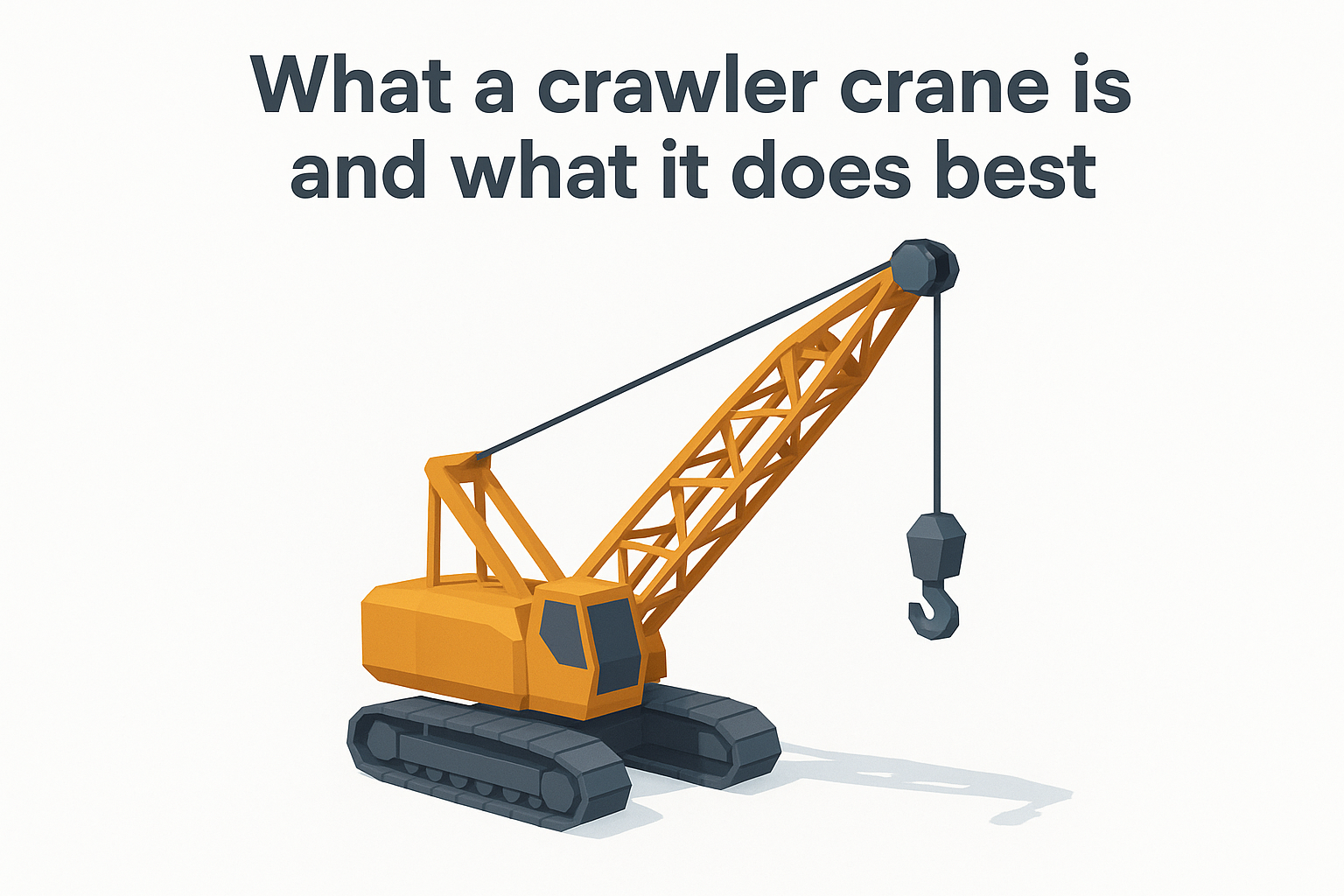
A crawler crane is a large lifting machine mounted on continuous steel tracks, similar to those on bulldozers and excavators. The track system spreads the crane’s considerable weight across a large surface area, giving it exceptional stability on soft, uneven, or load-sensitive ground where wheeled equipment would sink or tip. This design makes crawler cranes the standard choice for long-duration, heavy-lift operations where the machine stays in one position for extended periods.
Where crawler cranes excel
Crawler cranes perform best on projects that require sustained lifting capacity in a fixed or slowly moving position. You will find them on bridge construction, industrial plant installation, offshore projects, and large infrastructure builds where the crane handles multiple heavy lifts from the same general location over weeks or months. Their tracks allow them to travel short distances on a job site without full dismantling, which is a meaningful advantage when you need to reposition between nearby lift points.
Crawler cranes can handle some of the heaviest lift capacities available, with larger models rated well above 1,000 tonnes.
In the crawler crane vs mobile crane comparison, the crawler’s primary strengths are raw capacity and ground stability, not speed or ease of transport between sites. If your project demands both, you need to weigh those trade-offs carefully before committing.
What a mobile crane is and what it does best
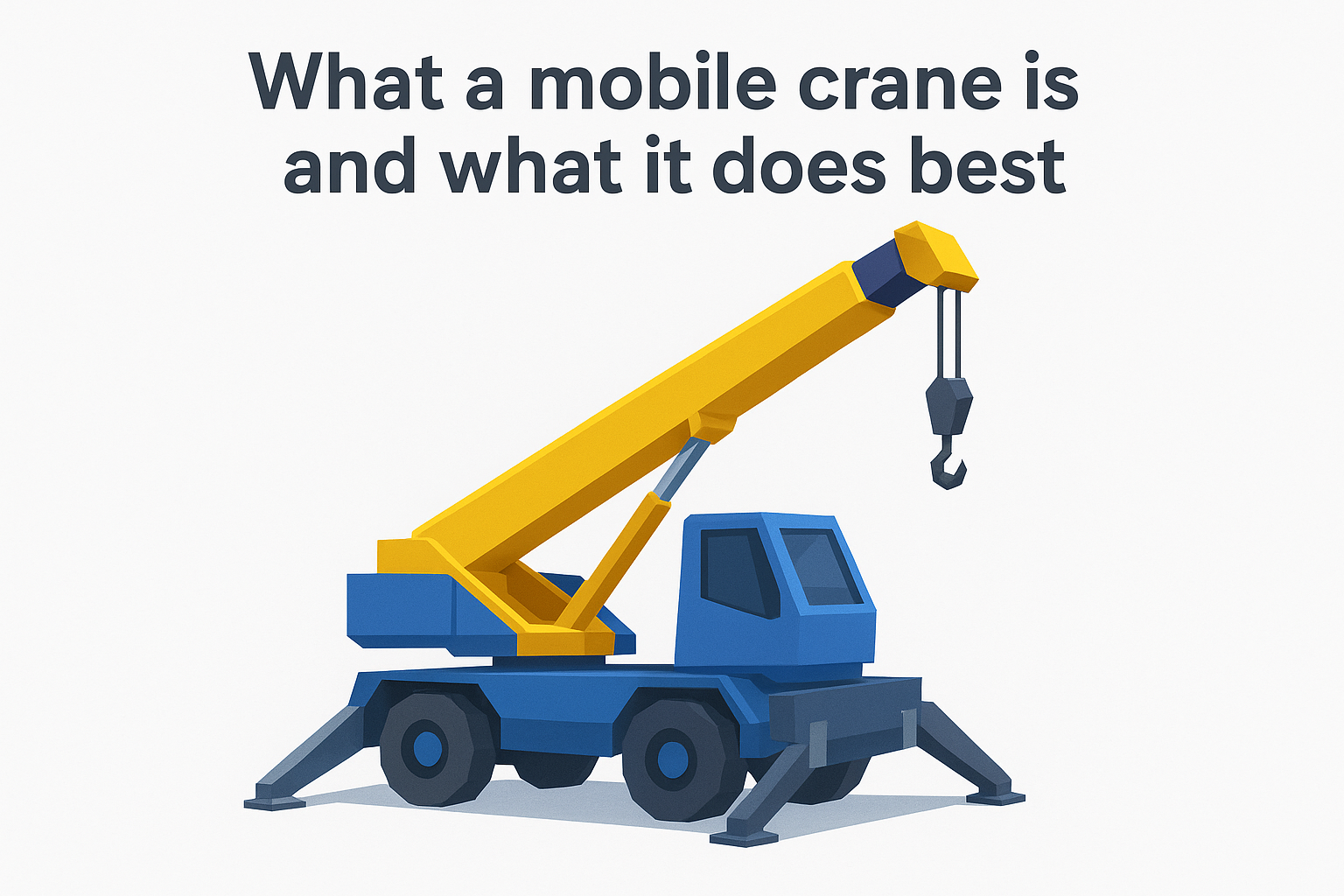
A mobile crane is a self-propelled lifting machine mounted on a wheeled carrier, which allows it to drive on public roads and reach job sites under its own power without disassembly or specialized transport trailers. Most models use hydraulic telescoping booms that extend and retract quickly, cutting setup time significantly compared to lattice-boom alternatives. That combination of road mobility and fast deployment makes mobile cranes the practical choice when your work demands frequent repositioning across multiple locations.
Where mobile cranes perform best
Mobile cranes deliver the most value on short-to-medium duration projects where you need reliable lifting capacity without the extensive ground preparation or long assembly times that crawler cranes require. Construction sites in urban settings, building erection work, and utility infrastructure projects are areas where mobile cranes consistently outperform alternatives. Their outrigger systems provide solid stability on firm, level ground, which covers the majority of prepared construction sites.
A mobile crane can arrive on site, set up, complete a lift, and move to the next location within a single working day.
In the crawler crane vs mobile crane comparison, the mobile crane’s core strength is operational flexibility. You trade some raw lifting capacity and stability on soft or uneven ground for the ability to move quickly between sites, reduce transport costs, and maintain tight project schedules without heavy site preparation work.
Key differences and real-world cost drivers
When you compare a crawler crane vs mobile crane, the differences go beyond track versus wheels. Ground pressure, assembly requirements, transport logistics, and project duration all shape the real costs you face once work begins.
Purchase and mobilization costs
Crawler cranes carry a higher purchase price driven by their complex undercarriage systems and structural steel components. Beyond acquisition, you face disassembly, low-bed trailer transport, and reassembly costs every time the machine moves to a new site, which adds up quickly on projects that require frequent relocation.
Mobile cranes cost less upfront in most configurations and drive themselves between sites on public roads, keeping your mobilization budget low. Your tradeoff is reduced maximum lift capacity and a firm, level surface requirement before you can safely deploy the outriggers.
Operational and daily costs
On long-duration projects with repeated heavy lifts, crawler cranes justify their higher daily operating rates through sustained productivity from a single setup over weeks or months.
Your total cost per lift drops significantly on extended projects when a crawler crane works from one position for an extended period without incurring repeated mobilization expenses.
Mobile cranes offer lower daily rates and faster setup, which makes them the more economical choice when your schedule demands quick lifts across multiple locations without extended stays on any single site.
How to choose the right crane for your job
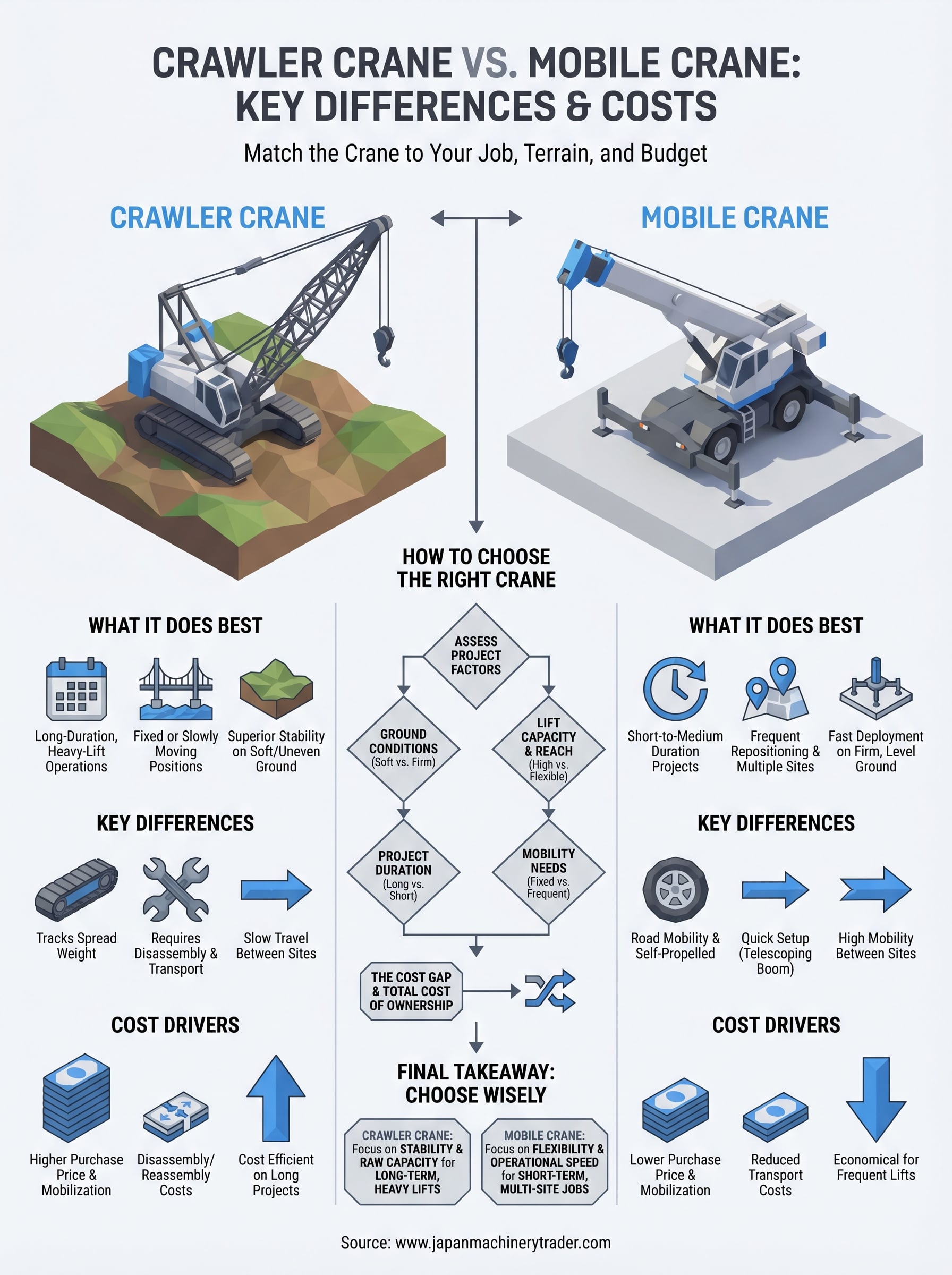
The crawler crane vs mobile crane decision comes down to four factors you need to assess before you contact any supplier: your ground conditions, required lift capacity, project duration, and how often you move between sites. Answer those questions honestly and your crane selection becomes straightforward.
Match the crane to your ground and lift profile
Start with your site terrain. If your ground is soft, sloped, or space-restricted, a crawler crane is your safer and more productive option. If your site is firm, level, and well-prepared, a mobile crane handles most lifts efficiently without the added mobilization complexity.
Your required lift capacity sets the floor for your search. Never buy to the exact minimum rating. Build in headroom.
Then look at your lift weight and boom reach requirements together. Higher combined ratings push you toward crawler configurations, where structural stability supports the load safely over longer durations.
Factor in your project timeline and budget
Short projects with multiple lift locations favor mobile cranes. You save on transport costs and keep your schedule tight. Long projects with sustained heavy lifting from fixed positions favor crawler cranes, where a single mobilization pays off across hundreds of lift cycles.
Use your cost-per-lift calculation across the full project duration to make the final call, not just the upfront purchase price.
Final takeaways
The crawler crane vs mobile crane decision is straightforward once you work through the four core factors: ground conditions, lift capacity, project duration, and site mobility requirements. Crawler cranes give you superior stability and raw lifting power on soft terrain and long-duration projects. Mobile cranes give you flexibility, faster setup, and lower mobilization costs when your work demands frequent repositioning across multiple sites.
Your budget analysis should always go beyond the purchase price. Total cost per lift across your full project timeline tells you far more than sticker price alone. Factor in transport, ground preparation, and assembly time before you commit to either machine. That calculation often changes which crane makes financial sense for your specific project.
Sourcing used heavy construction equipment with verified inspection records and documented service history gives you a reliable starting point. Japan Machinery Trader connects you with professionally inspected Japanese rental fleet machinery at competitive prices, with full export logistics support handled for you.