 JapanMachineryTrader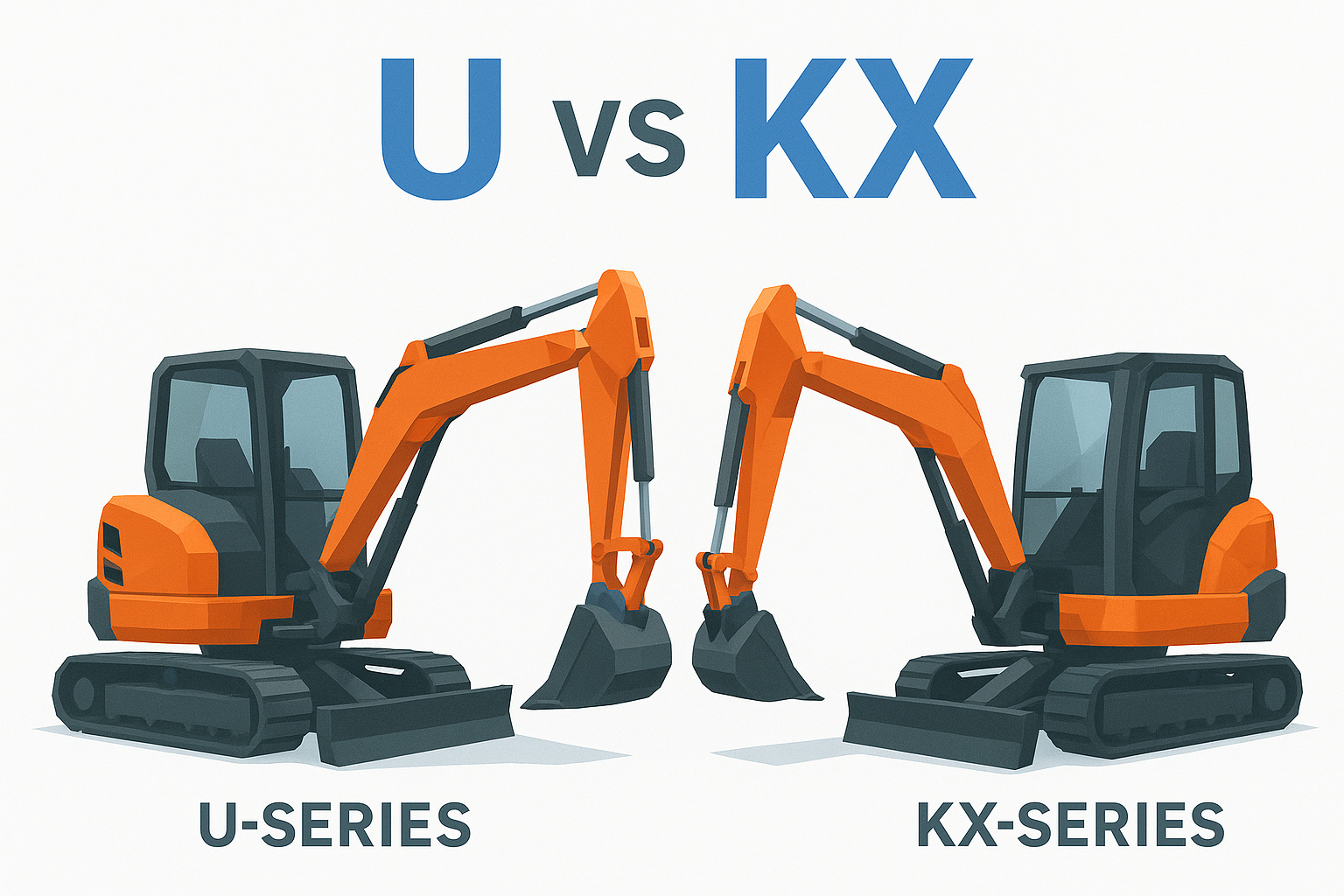
Kubota builds some of the most dependable compact excavators on the market, but choosing between their kubota mini excavator models can get confusing fast. Between the U-series and KX-series alone, there are significant differences in design, size, and capability that directly affect what jobs they can handle.
Whether you’re digging footings in a tight residential lot or trenching utilities on a larger site, picking the wrong model means either overpaying for capacity you don’t need or struggling with a machine that’s undersized. The specs matter, operating weight, dig depth, and tail swing all determine how a machine performs in real conditions. And when you’re buying used, understanding these details becomes even more critical.
At Japan Machinery Trader, we source and export used Kubota mini excavators directly from Japanese rental fleets, machines that typically come with lower hours and documented maintenance histories. This guide breaks down six popular U and KX models side by side, covering their specifications, key differences, and which jobs each one fits best.
1. Find the right used Kubota mini from Japan
Buying the right machine from halfway around the world starts with having a clear process. Kubota mini excavator models span a wide weight and capability range, so narrowing your selection before you contact a supplier saves time and reduces the risk of ending up with a machine that doesn’t match your site conditions or budget.
Decide your size class first
Your operating weight class is the first number to pin down. Machines under 2 tons fit through narrow gates and work in confined spaces, while 4-to-6 ton models deliver meaningfully more dig depth and lift capacity. Before you compare any specs, identify the tightest access point on your jobsite and the deepest trench or heaviest lift your project requires.
- Under 2 tons: tight residential, indoor, and urban work
- 2-4 tons: general landscaping, utility trenching, medium sites
- 4-6 tons: production trenching, heavier lifting, open sites
Compare U vs KX by jobsite constraints
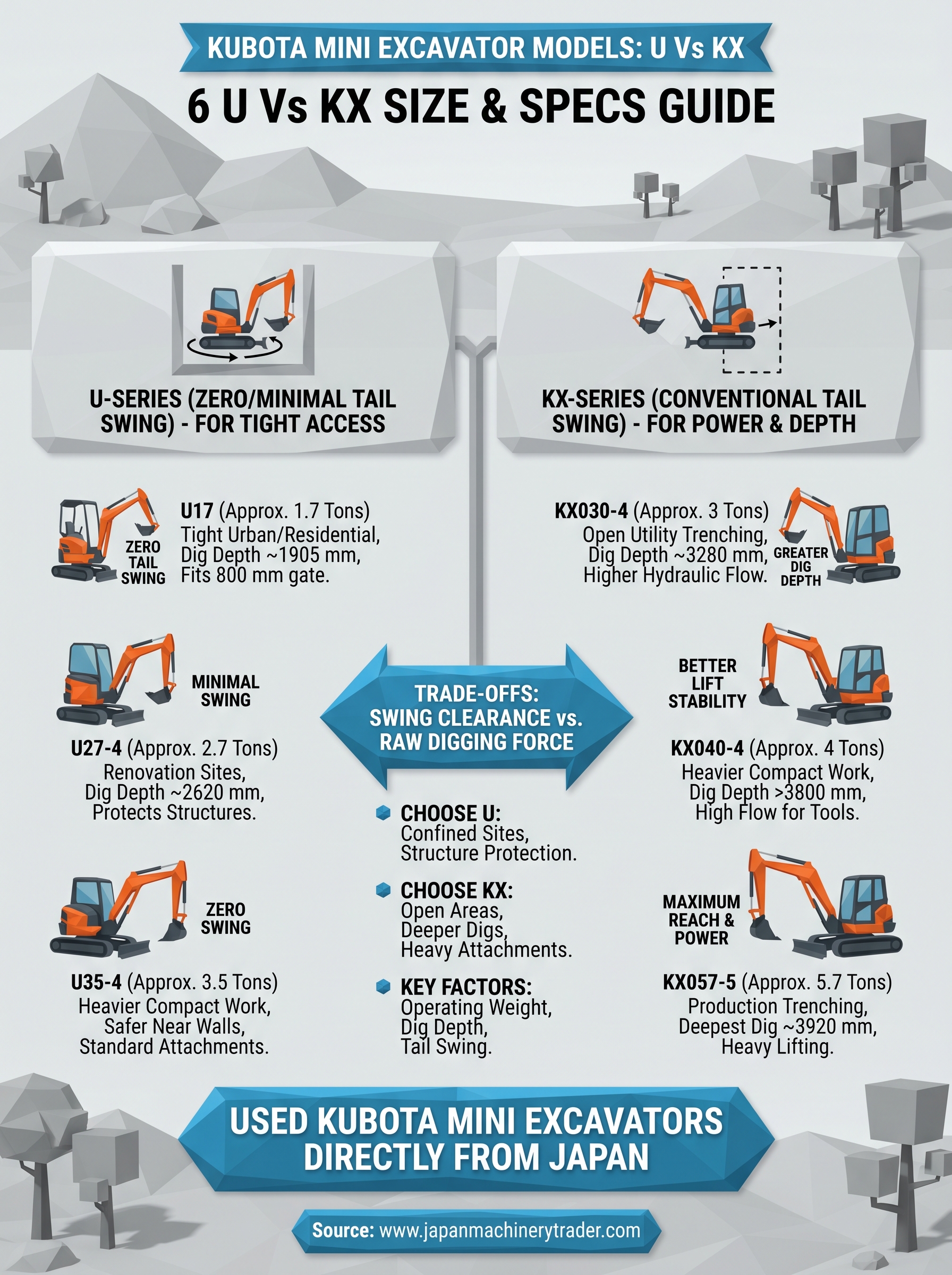
The U-series uses a zero or minimal tail swing design, which protects the counterweight from walls and obstacles when you rotate on a confined site. The KX-series runs a conventional tail swing and typically delivers more raw digging force and hydraulic flow for the same weight class.
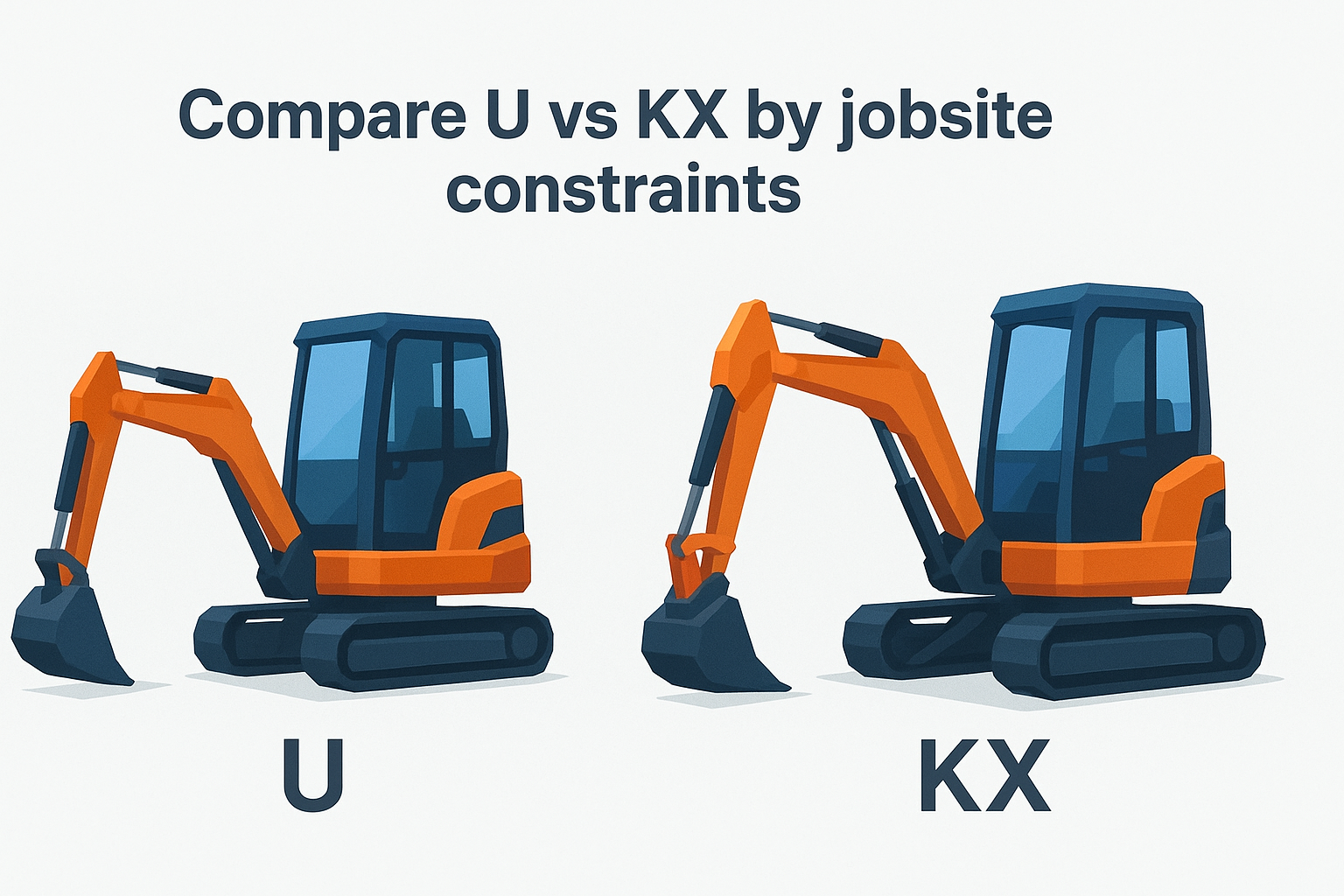
The choice between U and KX often comes down to one question: how much room do you have to swing the machine?
If your work happens mostly in open areas or requires higher attachment power, the KX is worth the trade-off on swing clearance.
Ask for the details that protect you on used equipment
When you source from Japan, request the machine hour meter reading and any available service records before negotiating a price. Rental fleet machines generally follow structured maintenance intervals, but you still want to see an inspection report covering undercarriage wear, hydraulic cylinder condition, and any repaired damage.
Plan transport, shipping, and import basics
Shipping costs and import duties vary significantly by destination country, so factor these into your total budget before you commit to a purchase price. A reliable exporter handles customs documentation, loading, and export certificates, which removes the coordination burden on your end and reduces the chance of delays at the destination port.
2. Kubota U17
The U17 is the smallest machine in Kubota’s U-series lineup, sitting at roughly 1.7 metric tons of operating weight. It runs a true zero tail swing design, making it one of the most practical choices for jobs where space is the primary constraint.
Where it fits in the lineup
Kubota positions the U17 below the U27 and U35 in its range, targeting tight urban and residential projects specifically. Among all kubota mini excavator models, it holds the entry-level weight class while still delivering enough dig depth for foundation and utility work.
Key specs to compare on the U17
With a max dig depth of approximately 1,905 mm and a 10.1 hp diesel engine, the U17 punches above its size for light-duty tasks. Operating weight of 1,710 kg means the counterweight stays within the track width during rotation, which protects walls and structures on confined sites.
At under 2 tons, the U17 can pass through a standard 800 mm gate, making it irreplaceable on enclosed residential lots.
Best uses and common attachments
You’ll find the U17 most effective for residential foundations, garden landscaping, and narrow trench digging. Common attachments include hydraulic breakers for light demolition and auger drives for fence post or small pier installations.
What to check on a used U17
Inspect the rubber tracks and undercarriage rollers first, since urban and hard-surface use accelerates wear faster than typical soil conditions. Also check the boom and bucket cylinder seals for hydraulic leaks before you commit to a purchase price.
3. Kubota U27-4 vs KX030-4
Both machines occupy the 2 to 4 ton range within Kubota’s compact excavator lineup, but they serve different priorities on the jobsite. Understanding their differences helps you pick the right machine before you commit to a purchase.
Where these models sit in the 2 to 4 ton range
The U27-4 weighs approximately 2,690 kg with a zero tail swing design, while the KX030-4 sits at around 2,960 kg with a conventional counterweight that extends beyond the tracks during rotation. Among all kubota mini excavator models, these two represent the first real fork in the road between swing clearance and raw dig performance.
Key spec differences that change real performance
The KX030-4 delivers a max dig depth of roughly 3,280 mm, compared to the U27-4’s 2,620 mm, a meaningful difference when you’re trenching for utilities or drainage. The KX030-4 also produces higher hydraulic flow, which improves performance when you run demanding attachments like hydraulic thumbs or tilting buckets.
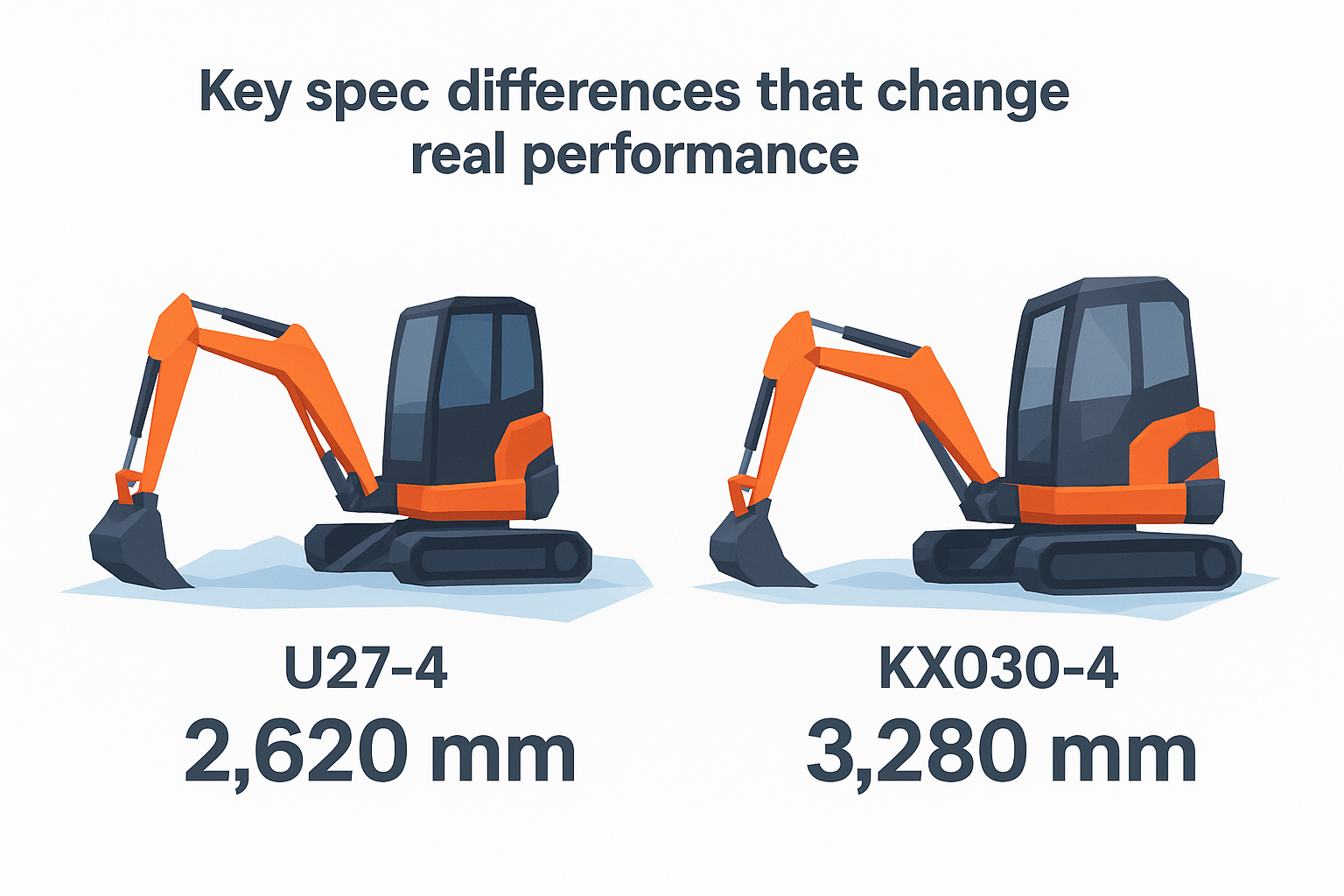
If your site is open and your work involves regular trenching beyond 2.5 meters, the KX030-4 is the stronger choice on paper.
Best uses and attachment matchups
The U27-4 fits tight renovation sites and landscaping work where swing clearance protects structures. The KX030-4 suits open utility trenching and general civil work where the extra dig depth and hydraulic output pay off regularly.
What to check on a used U27-4 or KX030-4
Inspect the hydraulic quick coupler and auxiliary lines for wear or leaks, since rental units frequently run attachments. Also verify swing bearing play by rotating the house slowly and feeling for resistance or noise.
4. Kubota U35-4 vs KX040-4
Both machines step up from the 2-ton class into heavier compact work, giving you more dig depth, lift capacity, and hydraulic output than anything smaller in the Kubota range.
Where these models sit for 3 to 5 ton work
The U35-4 weighs approximately 3,530 kg with a zero tail swing configuration, while the KX040-4 sits at around 3,990 kg with a conventional tail swing. Among kubota mini excavator models, both sit at the upper end of the compact range before machines cross into mid-size territory and deliver dig depths above 3,800 mm, putting them firmly into production utility work.
Stability and lift considerations that drive the choice
With more counterweight mass, the KX040-4 delivers better lift stability when picking heavy loads or working on uneven ground. Your U35-4 trades some of that stability for zero tail swing clearance, making it the safer choice when operating near walls, vehicles, or structures on restricted sites.
If you regularly lift heavy pipe or prefabricated sections, the KX040-4’s extra counterweight gives you a meaningful safety margin on uneven terrain.
Hydraulic options that matter for attachments
Auxiliary hydraulic flow separates these two machines when it comes to attachment performance. The KX040-4 produces higher flow rates that support demanding tools like cold planers and tilt rotators, while the U35-4 handles standard attachments well but shows limits with the highest-demand equipment.
What to check on a used U35-4 or KX040-4
Inspect the boom pivot pins and bushings for wear, since heavier work cycles accelerate deterioration at these points faster than lighter machines. Also verify hydraulic hose condition along the boom for chafing or repaired sections that signal prior stress or overloading.
5. Kubota KX057-5
The KX057-5 is Kubota’s largest compact excavator in the KX lineup, sitting at approximately 5,700 kg of operating weight. It bridges the gap between compact and mid-size machines, giving you significantly more reach and power than anything else in the Kubota compact range.
Where it fits for heavier compact excavation
Among all kubota mini excavator models, the KX057-5 sits at the top of the compact class, above the KX040-4 and every U-series option. When you need the deepest dig and highest lift capacity before stepping into full mid-size territory, this machine fills that position. Common project types where it outperforms lighter Kubota models include:
- Deep foundation excavation on commercial sites
- Large-diameter pipe laying and trench work
- Repetitive heavy lifting on open civil projects
Key specs to compare when stepping up in size
With a max dig depth of approximately 3,920 mm and a 47.6 hp engine, the KX057-5 delivers meaningfully more reach and hydraulic power than the KX040-4. Operating weight near 5,700 kg also improves lift stability significantly on sloped or uneven ground.
That combination of dig depth and engine output makes the KX057-5 the strongest option when your project demands consistent production trenching.
Best uses for production trenching and lifting
Your best return on a KX057-5 comes from deep utility trenching, pipe installation, and repetitive lifting cycles where smaller models run short on depth or capacity. It also handles large hydraulic attachments like hydraulic hammers and mulchers more effectively than any lighter model in the compact Kubota range.
What to check on a used KX057-5
On a used unit, inspect the undercarriage components including sprockets, rollers, and track tension, since the heavier operating weight accelerates wear faster than on lighter machines. Also verify hydraulic pump output pressure during a live test cycle to confirm the system delivers full rated performance before you finalize a purchase.
Next steps
You now have a clear picture of how kubota mini excavator models compare across both the U-series and KX-series, from the tight-clearance U17 all the way up to the production-grade KX057-5. The right model comes down to three things: available swing clearance on your site, the dig depth your project demands, and the attachment output your work requires. Match those three factors to the spec tables above, and the decision becomes straightforward.
Sourcing a used Kubota from Japan gives you access to well-maintained rental fleet machines with lower hours and transparent inspection records at prices that beat most alternatives. The export process, including documentation, shipping, and customs coordination, does not have to be complicated when you work with an experienced supplier who handles it end to end. Browse available inventory and contact the team directly at Japan Machinery Trader to find the right machine for your next project.